Documents
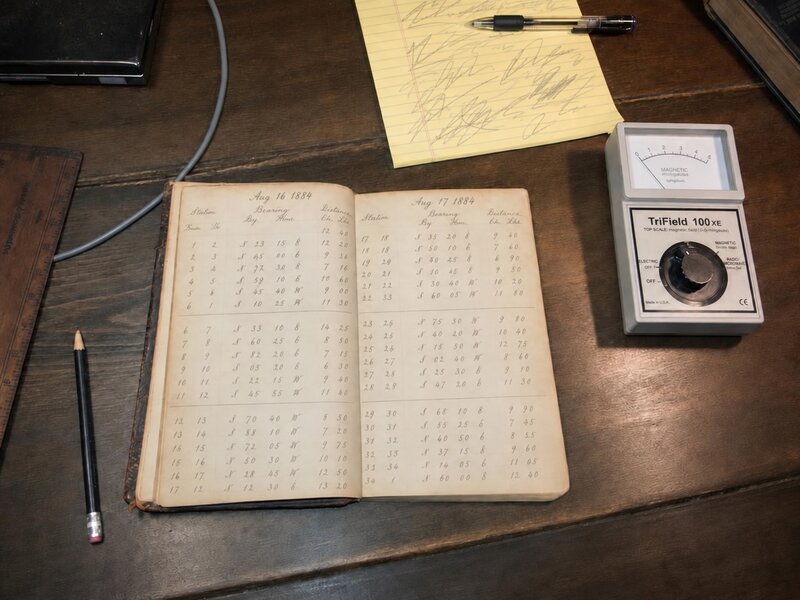
Physical materials I have or have photographed. For each I've said what it is, where it came from, and what I'm uncertain about.
The Foote Journal
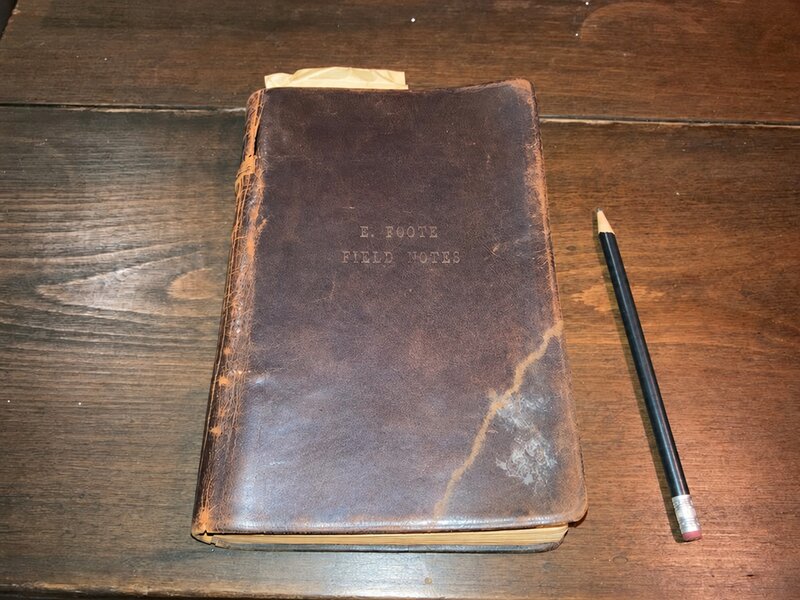
What it is: A hard-cover field journal, dark brown leather, roughly 5 by 8 inches. Water damage on the lower right corner of the cover and the first several pages. One volume. Found in the crawlspace of my house on Barron Boulevard, Grayslake, September 1998. The house was built in 1904; I don't know how long the journal had been there.
Authentication: A staff archivist at the Chicago Historical Society examined it in spring 2002 and said the paper, binding, and ink were consistent with an 1880s field journal. That was an informal look during a research visit, not a professional certification. I haven't represented it as more than that.
The handwriting is consistent throughout. Foote abbreviates measurements, uses period-standard surveying notation, and writes personal observations in the same hand as his technical data. One exception: the margin note I describe below, which appears to have been added at a later time.
Bridget Connell and the parcel
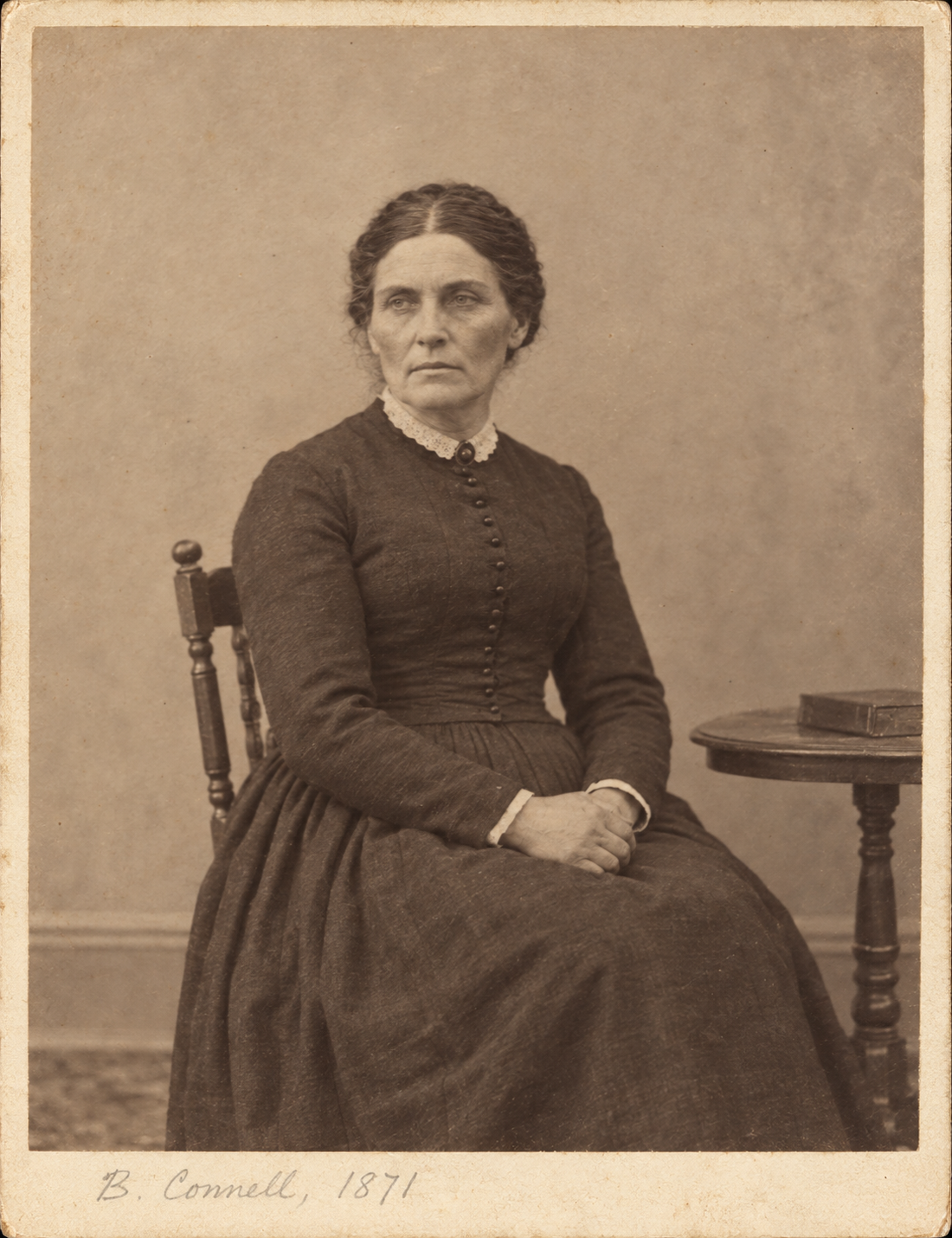
Bridget Connell had farmed the Avon Township parcel since at least 1862 -- more than twenty years by the time Foote's survey crew arrived in 1884. Her husband Patrick had died years earlier; a plain stone marker near the east corner of the property is mentioned in Foote's notes as a reference point he had to work around. She was well-known to neighboring farms for her kitchen garden and her willingness to trade produce. The newspaper item I found in the Waukegan archive calls her "a long-established resident of the township."
She refused three purchase offers from the Wisconsin Central. The fourth was not an offer; it came with the Lake County Sheriff. When she was removed, she spoke for several minutes toward the ground. Two of the survey crew who were present gave notice that afternoon and didn't come back. Foote's account of this is matter-of-fact. He found it inconvenient.
She was last seen in late August 1884 at a neighboring farm. She asked for water and something to eat, and said she was heading north. After that I've found no record of her.
The entry that kept me reading
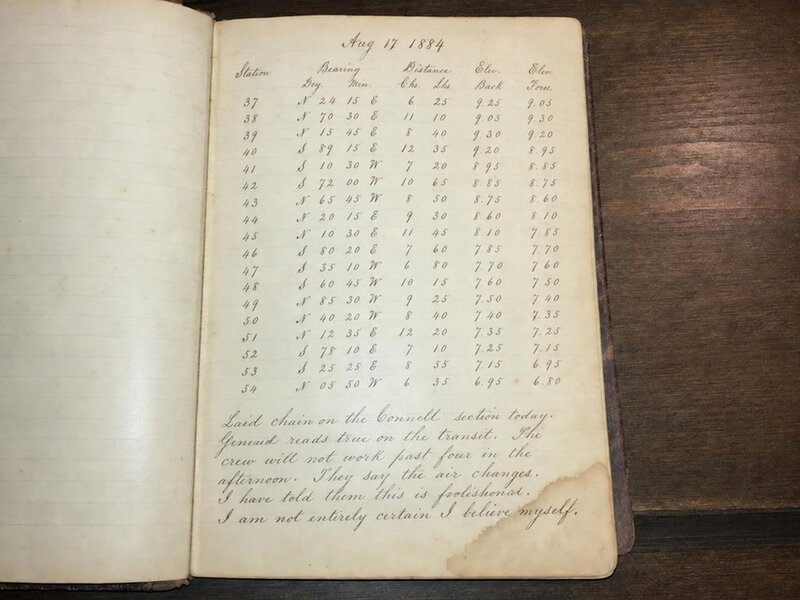
Three days after the removal, Foote was back on the parcel finishing his measurements. The bulk of the entry is survey data: columns of bearings, distances, elevations. At the bottom of the third page, the columns stop and he writes:
"Laid chain on the Connell section today. Ground reads true on the transit. The crew will not work past four in the afternoon. They say the air changes. I have told them this is foolishness. I am not entirely certain I believe myself."
The last sentence is written with heavier pen pressure than the rest of the entry. I noticed this when I was photographing the pages in 2002. I've looked at it many times since. Either he paused and pressed harder, or that sentence cost him something to write. I can't determine which from the paper alone.
He never explained the crew's behavior in any subsequent entry. His next pages cover the right-of-way north of the parcel and make no further mention of it.
The compass anomaly
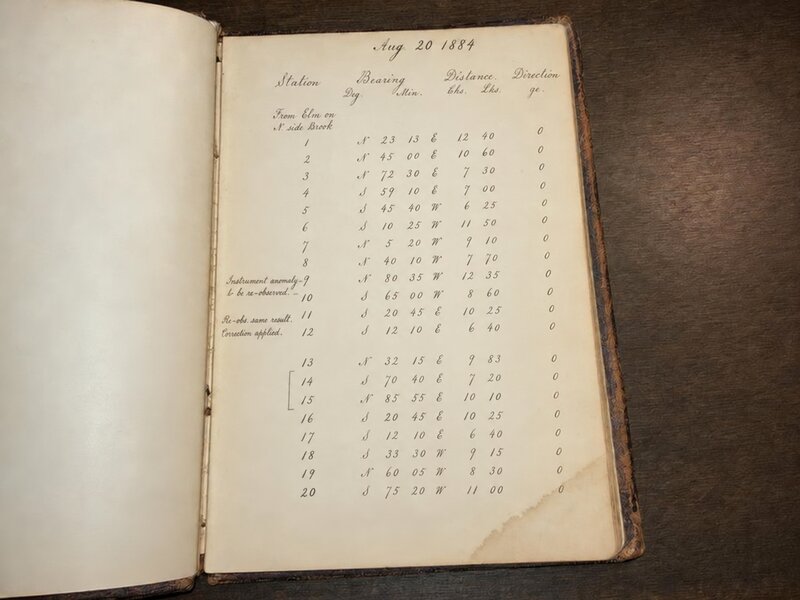
During the same week, Foote's compass readings through the Connell parcel deviate from what his reference points would predict. The deviation is consistent across a stretch of the right-of-way. He notes it twice in the margin: "Instrument anomaly -- to be re-observed" and then, two days later, "Re-obs. Same result. Correction applied." He uses a correction factor and continues.
A plausible ordinary explanation: glacial till in Lake County can carry dispersed ferrous material sufficient to deflect a compass. I can't confirm or rule that out. What I can say is that the section of the right-of-way showing the deviation is the same section where, three days later, the crew refused to work after four in the afternoon.
I added a pencil bracket to the margin in 2001. I regret writing in the journal.
The margin note
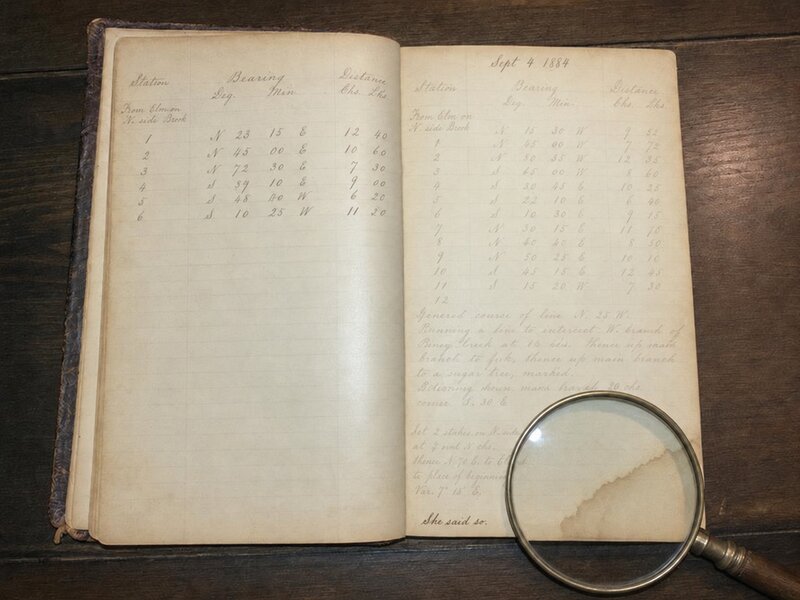
In the early September 1884 pages, after the Connell section entries have ended, one page has something unusual at the bottom. The iron-gall throughout this page has faded to a very pale brown -- more than on the pages around it. At the very bottom, below Foote's last entry for the day, two words were written in noticeably darker ink. The archivist who examined the journal in 2002 confirmed the ink concentration was different: applied after the surrounding text had already aged.
The words are: She said so.
Whatever Connell said when she was removed -- Foote described her as speaking "toward the ground" -- Foote came back to this page at some later point and wrote those two words. I don't know when. I don't know what she said. I know that he was a professional, practical man who recorded this as a private notation on a page of survey data, and that it's the only time in the journal he acknowledges that she might have been right about something.
Avon Township Plat Map, circa 1880s
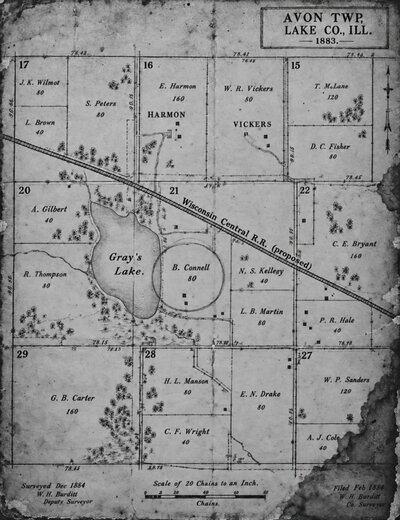
The plat map shows the Wisconsin Central right-of-way running through Avon Township and the Connell parcel identified by name. I use this to confirm the location of the parcel relative to where the Metra NCS line runs today.
The pencil annotation is mine, added to my photocopy when I was matching the plat to the journal's survey data. It is not on the original.
Newspaper Reference
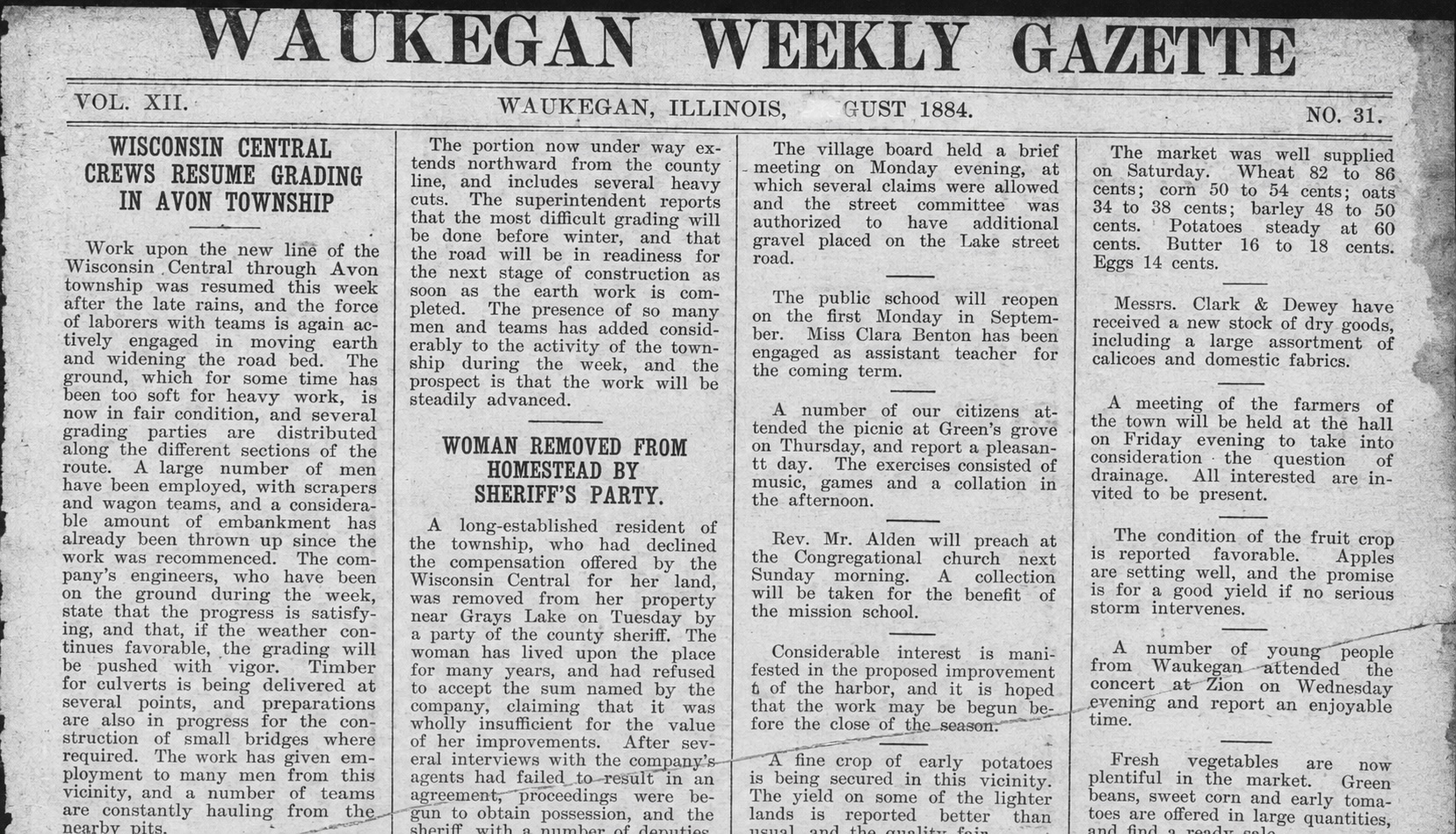
A brief newspaper item from the Waukegan archive, 1884, describing a woman removed from property near Grays Lake in connection with the Wisconsin Central right-of-way. She refused the offered compensation and was removed by the Lake County Sheriff. That's what I can read clearly. The rest of the column is too degraded.
The item calls her "a long-established resident of the township." That phrase stayed with me. She'd been there for more than twenty years. That's not a squatter or a speculator; that's someone with a life on that land. Her kitchen garden and her husband's grave marker are both mentioned in Foote's survey notes, matter-of-factly, as features of the parcel he was measuring.